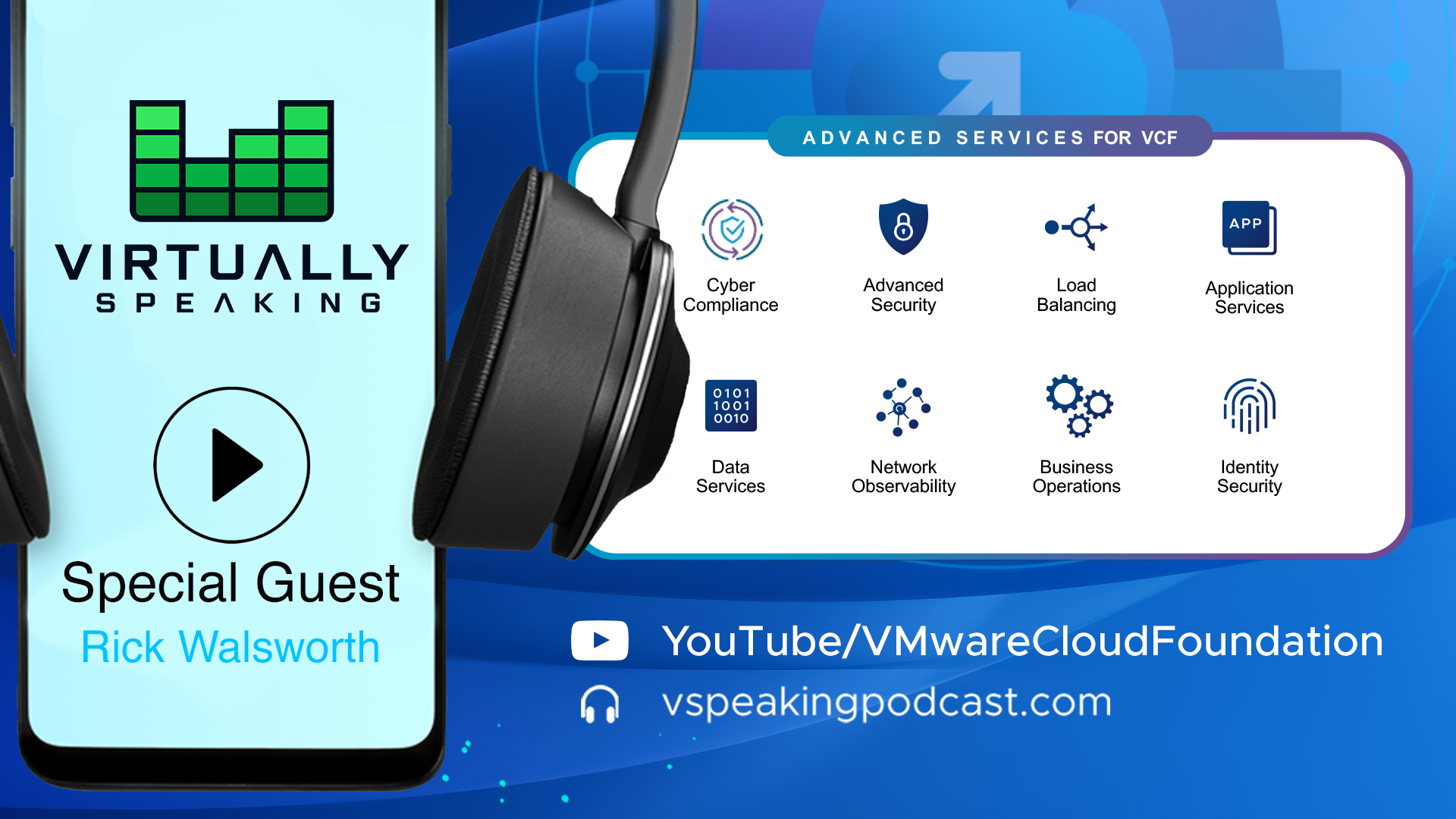
What comes after the core private cloud platform? The blog post, "A Closer Look at VMware Cloud Foundation Advanced Services," walks through a growing portfolio spanning cyber resilience, security, AI, data services, observability, cost optimization, and identity. Read the blog post to see which Advanced Services fit your environment.
What are VMware Cloud Foundation Advanced Services?
VMware Cloud Foundation (VCF) Advanced Services are a set of add-on capabilities that extend VCF beyond core compute, storage, and networking to address specific business and operational challenges.
VCF on its own delivers a complete modern private cloud platform. Advanced services are optional, targeted tools you can layer on to solve particular problems such as:
- Cyber resilience and security – services like ACC and VDefend help with ransomware resilience, configuration drift remediation, and preventing lateral movement.
- Data services – DSM provides database-as-a-service for PostgreSQL, MySQL, NoSQL, and SQL Server (in tech preview, with GA planned).
- Observability – Network Observability extends visibility into WANs, public clouds, and upstream dependencies.
- Cost and value insight – ValueOps helps you understand cost, utilization, and value across VCF environments.
- Identity and zero trust – Identity Security, integrating Symantec technologies, strengthens identity assurance beyond native IAM.
- Modern apps and AI – Tanzu services support Kubernetes-based workloads and emerging AI environments.
The key idea: these services complement, not complicate, the core platform. You adopt only what aligns with your current priorities—such as compliance, AI readiness, database automation, or cost transparency—rather than turning everything on at once.
How is VMware Private AI changing within VCF?
VMware Private AI has shifted from being an optional advanced service to becoming a core capability of the VMware Cloud Foundation platform.
This change reflects what is happening in real customer environments: AI is no longer experimental. Organizations are actively running AI workloads on VCF and expect AI support to be built in, not bolted on.
By making VCF Private AI Services part of the core platform, customers gain:
- Less friction – fewer separate components to deploy and manage.
- Simpler deployment – AI-ready environments can be designed as part of the standard VCF architecture.
- More predictable operations – AI workloads are treated as first-class citizens alongside traditional and modern applications.
In practice, this helps organizations reimagine how they plan their private cloud: AI capabilities are now assumed as part of the baseline VCF design, rather than an afterthought that requires additional layering of services.
Which advanced services should we prioritize first?
You don’t need to adopt all VCF Advanced Services at once. A practical approach is to align services with your most urgent business and technical needs.
Examples of where to start:
- Cyber resilience & compliance
Consider ACC if you operate in regulated or high-risk environments. ACC recently reached general availability and combines cyber recovery, ransomware resilience, and configuration drift remediation using SaltStack to automatically detect and correct deviations from desired state.
Pair it with VDefend if you need stronger protection against lateral movement and modern, fileless attacks, and want to reinforce a zero trust architecture.
- Modern apps & AI
Use Tanzu services if your teams are building modern applications on Kubernetes or exploring AI workloads. Tanzu integrates with VCF to provide scale, intelligence, and security while maintaining privacy and control.
- Data services
Adopt DSM if you want database-as-a-service for platform and DevOps teams. It supports PostgreSQL, MySQL, and NoSQL today, with SQL Server in tech preview and GA planned, helping you offer self-service databases without the traditional DBA overhead.
- Visibility & troubleshooting
Choose Network Observability if you need better insight across WANs, public clouds, and upstream dependencies, and want to reduce troubleshooting time beyond what basic tools like ping and traceroute can provide.
- Cost & value management
Implement ValueOps if you need clearer cost, utilization, and value metrics across VCF—especially as AI workloads increase complexity and spend.
- Identity & access
Add Identity Security if strengthening zero trust and identity assurance is a priority, and you want deeper verification that users are who they claim to be while interoperating with existing IAM investments.
To go deeper, VMware provides a dedicated Virtually Speaking podcast series on VCF Advanced Services, with high-level overviews and upcoming deep-dive episodes featuring the experts who build and operate these capabilities. Full episodes are available on the VMware Cloud Foundation YouTube channel and vspeakingpodcast.com.
.png "Levi, Ray & Shoup")



 Sign in with LinkedIn